Most of the firms we work with run on Microsoft, so Copilot tends to be the default AI-tool-of-choice when we show up. The reasoning makes sense: IT is already comfortable with Microsoft, Copilot sits right in the existing stack, and it plays nicely with everything the firm already uses. On top of that, Microsoft has made a pretty standard practice of offering the latest frontier models from OpenAI and Anthropic inside Copilot within a few weeks of their release, so most of the time you can pick the exact same model in Copilot that we use in Claude.
But many leaders we meet at Copilot-run firms have a strong feeling that they're missing out by not using Claude. They hear that Copilot is "worse" and Claude is "amazing" and they wonder what's real and what's hype. On a recent call with a multi-store retailer, one of their leaders told us that when Copilot hits their messy data, "it does start to skew and get a little lost," and their team was already talking about giving Claude, Copilot and ChatGPT the same data set to see which one gives them the best answers.
When we show up and advocate for Claude, a lot of leaders and their IT firms want to understand exactly why. They want to understand, from first principles, the reasoning behind our decision, and we've had that conversation enough times now that it seemed like a good time to get our POV down.
From our POV, the quality of AI work depends on the model, what it can see, and the app wrapped around it
To understand the Claude vs Copilot argument, I want to introduce you to two core analogies.
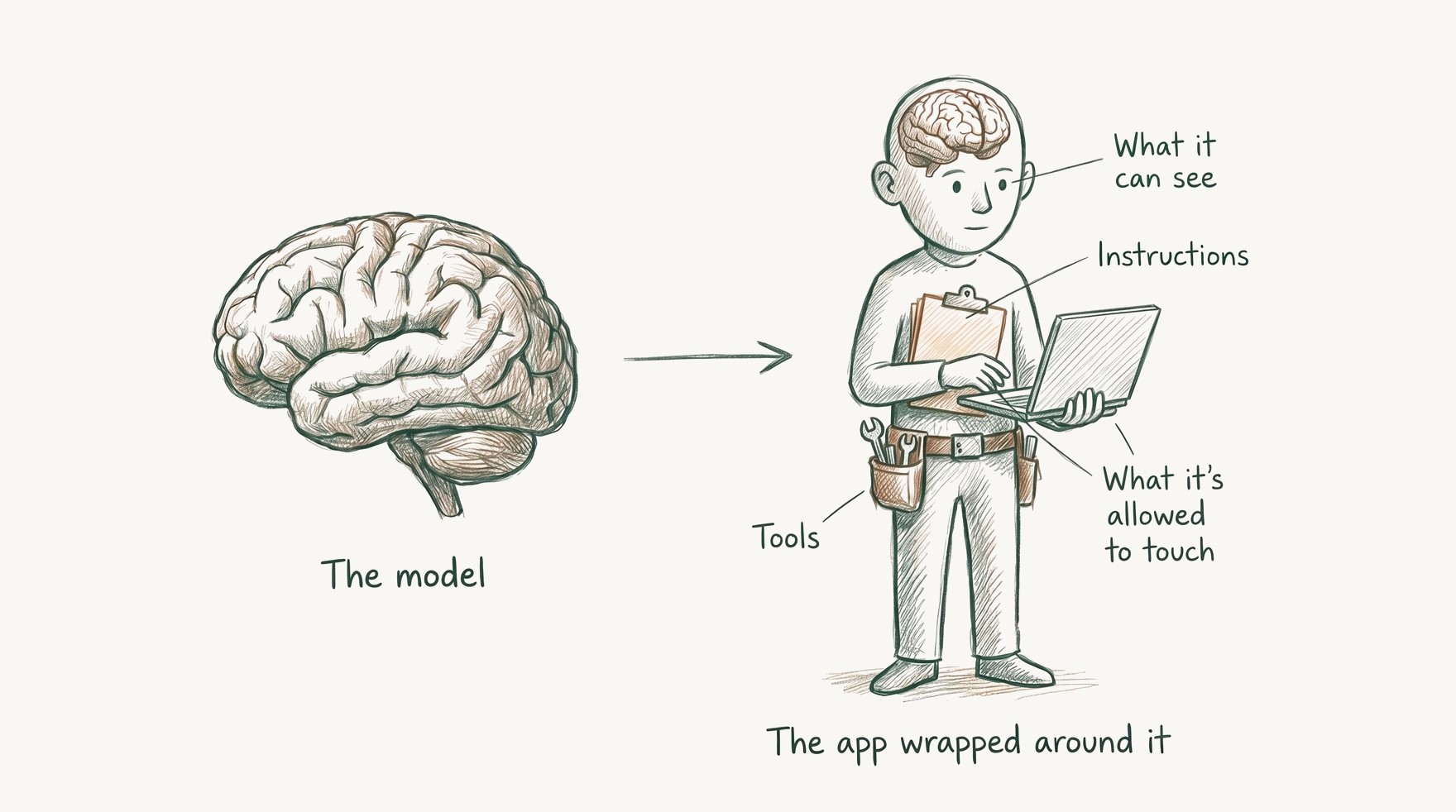
The first is the idea of the brain vs the body, and it comes straight out of our mantra at GI that "AI is Labor." If AI is a new hire you're onboarding, then the way I usually explain it to leaders is that the model is the brain, and the app wrapped around it is the body.
The brain decides how smart a person is, but the body decides what it can see, what it can pick up, and what it's allowed to touch. You can put a really smart brain in a jar with no body and it's not going to get much done.
The second is the "context window," which is a technical term for how much the brain can hold at any given time. For that I use the analogy of a pint glass.
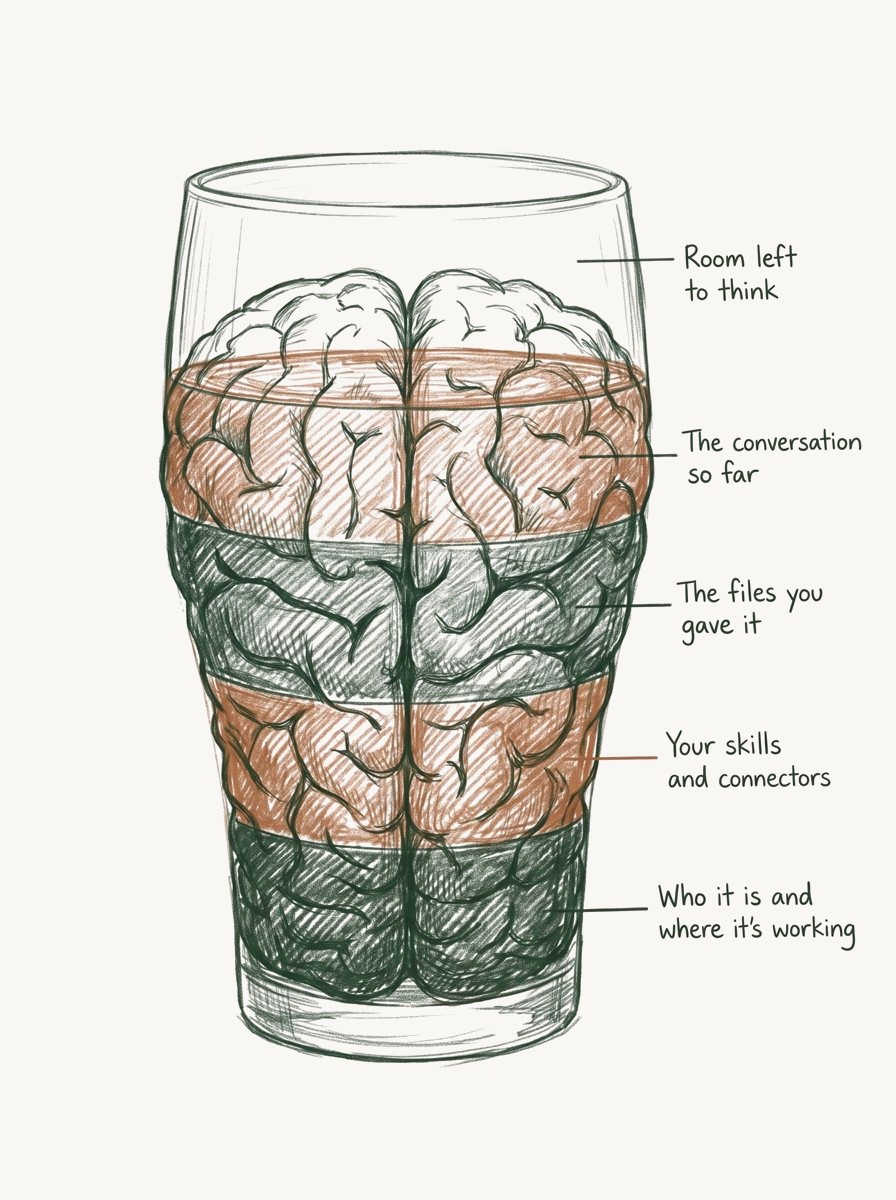
Before you even type anything, the app has already poured some liquid in: who the AI is, what app it's running in, who it's talking to, and a short description of every skill and connector it has. Then your files go in, and the conversation keeps filling it up the longer you talk. Whatever's left at the top is the room it has to actually think about your question.
The model decides how big the brain/glass is, but the app decides what gets poured into it, and that's a big part of why the same model can give you really different answers in two different apps.
Put those two together and the quality of an answer you get from AI comes down to three pieces, multiplied together:
1. The model. Anthropic's Claude models (like Opus), OpenAI's GPT models, Google's Gemini models, or whatever model is driving Cowork or any other app.
2. The context. What the AI can actually see when it answers you (the files, emails, data and instructions it has in front of it).
3. The app wrapped around the model. People in the industry call this the "harness." It's everything around the model: its instructions, its tools, how long it's allowed to think, what it's allowed to touch, and how the app decides what the model gets to see.
Copilot can have the same #1 as Claude. It does not have the same #2 or #3, and in my experience those two matter at least as much as the model does. Microsoft basically says this itself in its announcement about bringing more models into Copilot: "model choice is only part of what drives a great response."
The same model can score 10 to 30+ points apart depending on the app wrapped around it
Unfortunately, I couldn't find a clean, independent study that runs the same model in Copilot and in Claude on everyday Office work. What I did find is a ton of research that holds the model constant and only changes the app around it, and the gaps are pretty wild.
The tests below are benchmarks used to test AI's ability to do difficult software engineering work:
Another way of saying this: the gap between the same model running in different harnesses/apps is often bigger than the gap between the top models themselves, and there's a paper from this year literally titled "Stop Comparing LLM Agents Without Disclosing the Harness" because of it.
These are coding benchmarks and not Office work, so the exact numbers don't carry over to Copilot, but the mechanism is the same.
The best real-world read on Copilot I've found is the Australian Treasury's trial, which put it in front of 218 staff for 14 weeks. Before the trial, 75% expected it to help with some of their work, and by the end only 38% were using it that way, mostly for basic admin. Participants said it underperformed other AI tools, and the report put part of the blame on Treasury's own IT security restrictions, which lines up with everything above (i.e. good brain, mediocre body).
Copilot gives the model less to see, less to reach, and cheaper defaults
What the AI can see. Copilot's pitch is that it finds the context for you by searching across your email, files and meetings. Under the hood, that search breaks your documents into small chunks and hands the model the pieces it thinks are most relevant, which usually means excerpts instead of whole files. If it grabs the wrong pieces, or your SharePoint is full of old versions of the same file (which describes a lot of SharePoints we've seen), you can get a confident answer built on the wrong stuff, and people blame "Copilot" when the model probably never saw the right data in the first place. You can attach a specific file in Copilot too, but in our experience most people just ask and let it search. With Claude, the habit we teach leaders is the opposite: you decide what goes in. You attach the spreadsheet, point it at a folder, or let it drive your browser into a system you're already logged into. Claude has limits too, and with a really big file it also has to choose what to read, which is the pint glass again.
What the AI can reach. The retailer's BI lead told us that for Copilot to work with their ERP data, they first have to move that system to Microsoft's cloud, which they're hoping to tackle early next year. Meanwhile, their team runs the business in that system every single day through a browser. We're finding over and over that if a person can do the job on a computer, Claude can probably do a lot of it today through the same screens via Claude for Chrome, or through off-the-shelf connectors that many tools now offer, so the migration can run in parallel instead of being the domino everyone waits on.
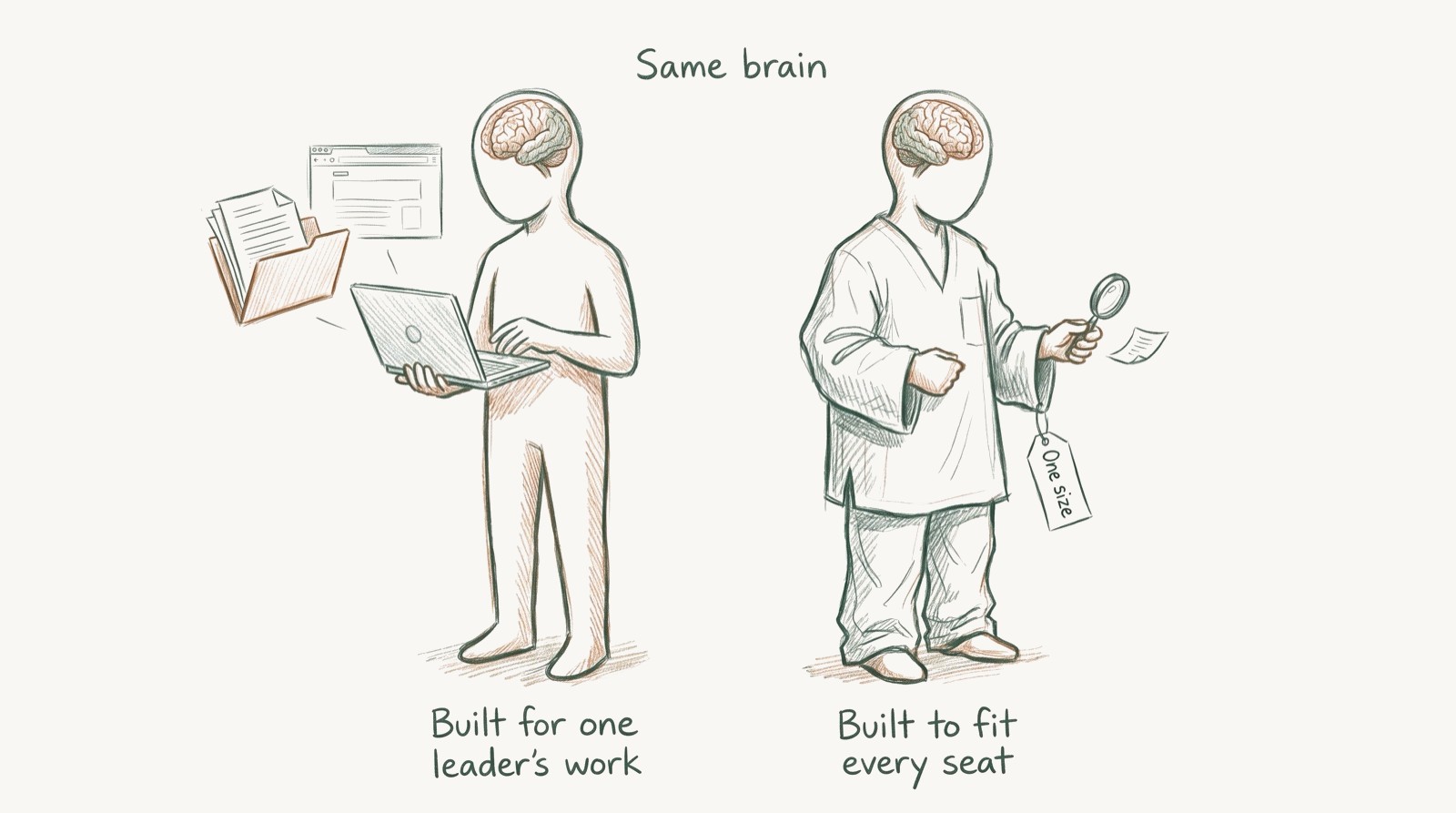
The app was built for a different job. Anthropic builds its models and its apps together, so the way Claude uses tools, reads files, runs long tasks and follows skills was tuned inside Anthropic's own products. Copilot wraps the same model in Microsoft's own instructions, permission checks and Office plumbing, and each of those layers can cut the model short. That's not really a knock on Microsoft, because Copilot is built as one tool that fits every seat in a huge enterprise, and that's a different goal than being a coworker one leader can train on their own work. Both have the admin and security controls IT expects, and the difference is what each one was tuned to do.
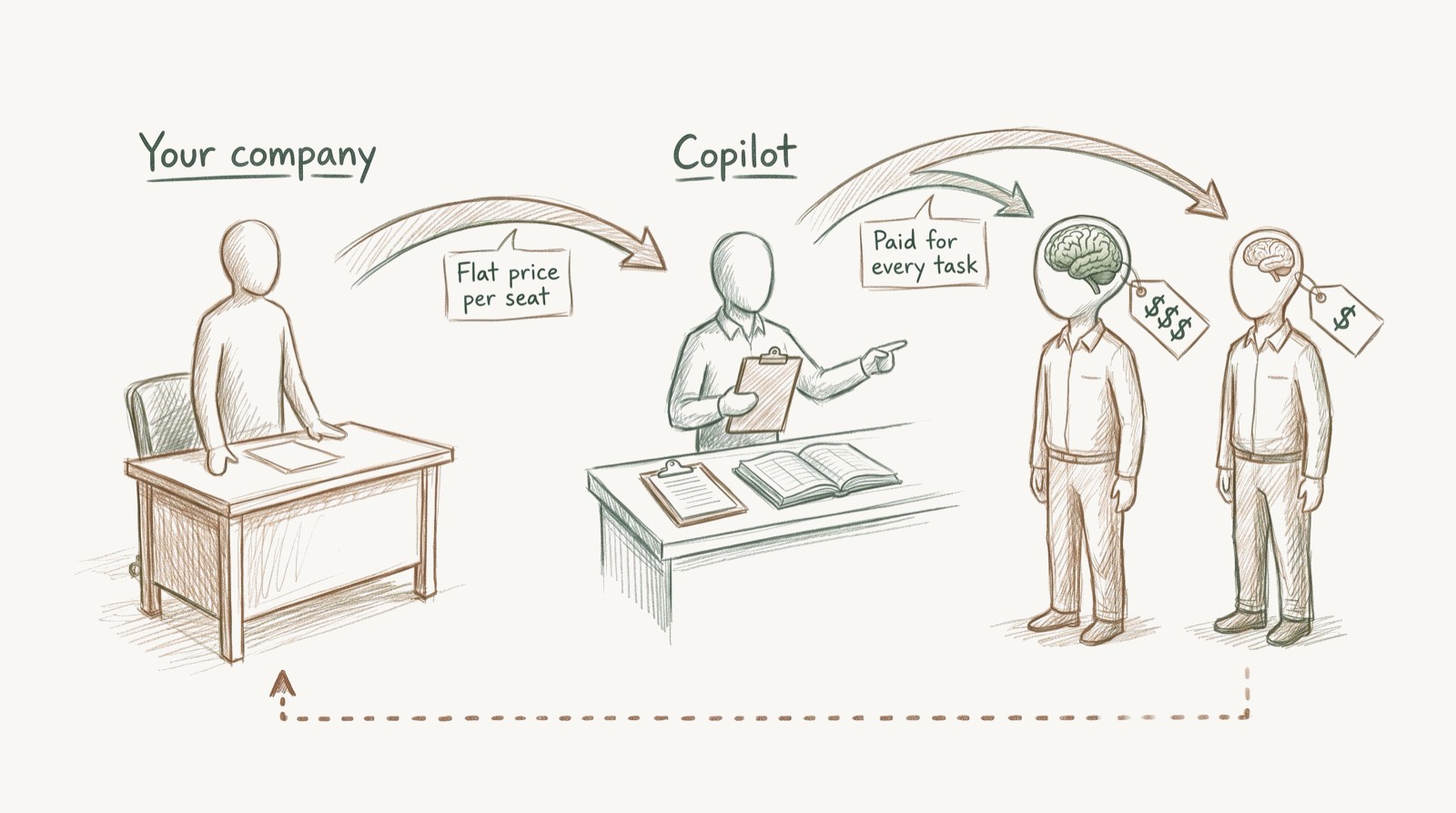
Defaults. If AI is labor, then Copilot puts Microsoft in the middle of a labor deal. On one side it sells your company AI labor at a flat price per seat, and on the other side it pays Anthropic and OpenAI for that labor every time it does a task (The Information reported this month that Microsoft is on track to pay Anthropic more than $2B a year for Copilot, and that some executives were worried about how much more Anthropic costs than OpenAI). I'd expect any company in that spot to push the work down to the lowest-cost labor it can in order to protect its margins, which in AI terms means shorter context, less thinking time, and routing your question to a cheaper model whenever it can.
When you buy Claude directly, Anthropic is selling you its own labor, so there's no middleman taking a cut, and in our experience it's been pretty generous with subscribers (Anthropic said last year that one person on a $200 plan ran up tens of thousands of dollars of usage). That doesn't mean Claude has no limits, because Anthropic caps its heaviest users too, but the incentive isn't the same. Which models you can pick in Copilot also depends on your license and on whether your admin turned them on, and I'd guess most people never open the model picker at all. So "Copilot can run Opus" and "the person in accounting is getting Opus with full reasoning on their question" are two really different statements.
Our belief is that training AI like a new hire works best in a tool built for that new hire
Today, the tool we've seen work for that is Claude. Leaders can build and fix their own skills, set up recurring tasks in Cowork, connect it to their systems (or let it drive the browser when a system has no connector for it), and they can just say things like "go read the transcript from the meeting I just had and update the SOP" and expect close-to-flawless execution.
Bonner sat with a property management leader recently where Claude read through thousands of scattered lease files and flagged that a charge that looked like a delinquency probably shouldn't be billed, because that tenant's lease had changed a month earlier. That's the judgment we're training leaders to build into their AI, and I haven't seen Copilot get leaders there yet.
Copilot is fine for searching email and summarizing meetings, and a lot of Microsoft shops will probably run both
To be fair, Copilot is fine at some things and you may have already paid for it. If the job is searching your own email, summarizing a Teams meeting, or drafting inside a document that's already open, it's fine. I'd expect a lot of Microsoft shops to end up running both: a baseline Copilot subscription to ride as it inevitably improves, and a subscription to a frontier product like Claude to hedge and ensure they're staying on top of the bleeding edge capabilities.
It's also not either/or inside Office anymore. Claude runs inside Excel, PowerPoint and Word now, so a company can stay all in on Microsoft and still have its leaders working in Claude.
One option: run a four-step test on your own data before you decide
The retailer's team already had the right instinct, which was to test it on their own data. Here's how I'd set it up so the result actually tells you something:
If the results come out close when both tools get the file directly, your gap is probably search and data quality, and cleaning up SharePoint will help both tools. If Claude is still clearly better with identical inputs, the gap is coming from the app around the model, which cleaning up your data won't fix.